Will the World Cup Redefine the Citywide Convention Experience?

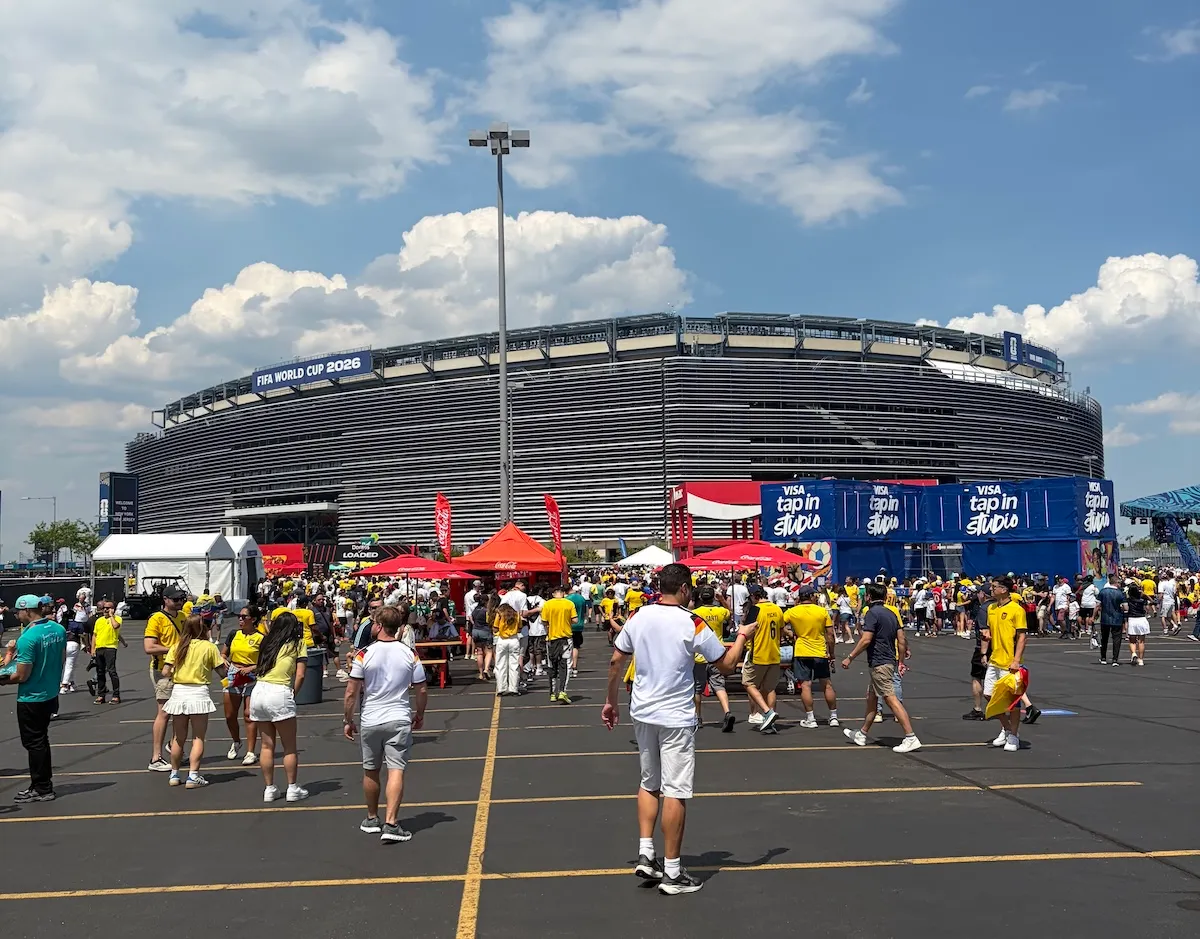
Photo Credit: New York New Jersey Stadium on game day. Oliver Murphy / Oliver Murphy
Skift Take
The 2026 FIFA World Cup is turning entire destinations into activation platforms for sponsors, communities, and events. The lessons may outlast the tournament.

More than 68,000 fans packed Philadelphia's Lincoln Financial Field for Brazil's group-stage World Cup match on June 19, but the crowd that holds lessons for event organizers wasn’t inside the stadium. Nearly 55,000 more gathered at the city's FIFA Fan Festival at Lemon Hill in East Fairmount Park the same day.
Over the course of the tournament, hundreds of thousands have moved through the festival grounds. Global sponsors, including Bank of America, Coca-Cola, Michelob Ultra, The Home Depot, Kia, and Diageo's Casamigos tequila, have mmersive brand activations.
The 2026 FIFA World Cup is redefining what it means to host a major event. The experience no longer begins and ends inside the stadium. Instead, entire destinations are becoming platforms for fan engagement, sponsor activations, cultural programming, and community experiences.
Long defined by convention centers, hotel room blocks, and coordinated bookings across a destination, the traditional citywide model is being reshaped by the scale and structure of the 2026 FIFA World Cup. In host cities, the action extends into fan festivals, branded takeovers, transit hubs, cultural institutions, and entertainment districts. The Fairmount Park site in Philadelphia, for example, was more than three miles from the city center.
Other host destinations are embracing the same approach and are leveraging neighborhoods far from the venue for activations."Our fan engagement footprint shows that mega-events do not have to be limited to one venue," said Natalie Hamilton, director of communications for the FIFA World Cup 2026 New York New Jersey Host Committee. "They can be regional experiences that connect global tourism with small businesses, cultural programming, and community events across multiple destinations."
Marketing Engines
While some restrictions around tournament sites have created obstacles for VIP groups, host destinations are using the tournament to offer everyone access to be part of the experience while creating destination-wide marketing engines.
Los Angeles is pairing its official fan festival with neighborhood fan zones, while Atlanta is combining watch parties, airport activations, business programming, and cultural exhibits into one coordinated campaign. Seattle has planned more than 100 soccer-related activations across the region, and New York and New Jersey are spreading programming across an expansive range of neighboring communities.
Complementing those efforts, the NY-NJ Host Committee's Welcome World Rewards program connects fans with more than 1,000 participating small businesses, with more than 500 voluntarily offering exclusive discounts and promotions.
The effort extends beyond marketing. The NY-NJ Host Committee estimates the tournament will welcome more than 1.2 million visitors and generate more than $3.3 billion in economic impact across the region. Organizers say a primary goal has been ensuring those benefits reach local communities rather than remaining concentrated around the stadium.
Collectively, these programs shift the definition of a citywide event from a logistical exercise to an economic development strategy that intentionally disperses visitors across an entire destination.
"The World Cup reinforces that major events coming into a destination can be leveraged in many ways," said Jim Kirkos, CEO of the Meadowlands Chamber and Meadowlands Live! CVB. "We are using it to elevate our brand, activate the local communities, engage with sponsors, and create greater awareness about how important tourism is as a component of the overall regional economy."
Community Connection
Kirkos said the World Cup has also highlighted a distinction in sponsor strategy. "Larger national brands are focused on visible impressions, so they tend to seek stadium-based activations," he said. "Regional and local brands most certainly seek a connection to the community, so local activations are better suited for those."
That community-first approach has also shaped the host committee's sponsorship strategy. Rather than concentrating activations around a single venue, it recruited 20 host city supporters, the largest local partner program of any FIFA World Cup 2026 host city. Experiences across New York City's five boroughs and New Jersey encourage visitors to explore neighborhoods, cultural institutions, and local businesses throughout the 39-day tournament.
That strategy has translated into measurable returns. Meadowlands Live! CVB secured sponsorship from Goya Foods for its Flag Cities fan festivals, where approximately 60,000 attendees participated across seven events.
"Their significant sponsorship will return 15 times their investment, and they got to touch 60,000 attendees over seven festivals," Kirkos said. Healthcare provider Hackensack Meridian Health also partnered with the destination, using the activations to engage directly with its target audience.
As destinations continue investing in entertainment districts, public spaces, and mixed-use developments, the World Cup offers a blueprint that could outlast the tournament itself. Rather than viewing citywides as logistics exercises centered on hotels and convention centers, destinations are increasingly treating them as distributed experiences designed to engage visitors, residents, sponsors, and local businesses alike.
The result may be a new definition of the citywide, one that blurs the lines between meetings, sports, festivals, destination marketing, and community development.