Don't Buy AI, Buy the Outcome

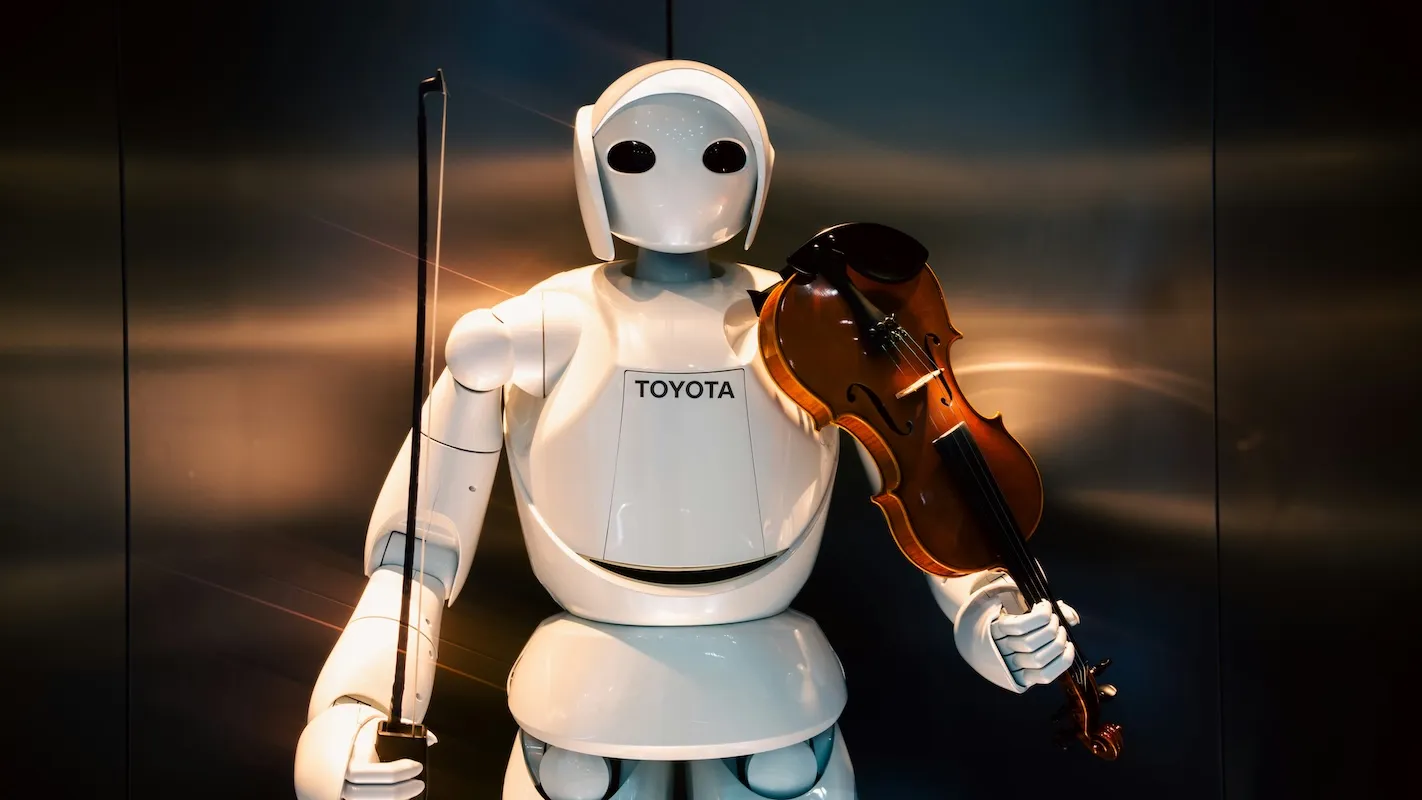
Photo Credit: An AI-powered robot holding a violin and bow. unsplash / Lilian Do Khac
Skift Take
Event tech’s real differentiator isn't AI, it's whether the technology saves time, improves attendee experiences, or drives measurable business results.

From matchmaking and lead capture to session summaries and venue sourcing, AI is quickly becoming embedded in the way we run events. But according to experts speaking during the Skift Meetings webinar AI and the Next Era of Events, planners shouldn’t focus on whether a platform has AI and start asking whether it actually solves a problem.

The discussion reflected findings from the latest Skift Meetings report, which reviewed more than 300 AI-powered event tech tools and explored what the technology brings to events.
"The question shouldn't be, 'Does the platform have AI?'" said Tess Vismale, co-founder of Event Tech Atlas. "It should be, 'How is it helping us do better work and do things differently?'"
Panelists agreed that AI is fundamentally changing the events industry, though adoption remains uneven.
"We're at the point of no return," said Vismale. "We have to deal with what's in front of us."
For Vanessa Lovatt, founder of Event Tech World, the challenge isn't a lack of innovation, it's the overwhelming volume of it.
"The pressure to use AI is real," Lovatt said. "’Do more AI’ is the guidance coming out from senior levels. For what? Why? Event organizers have so many things to do, they don’t have time to do something for the sake of doing it. Have to focus on goals, outcomes, targets, and then try to work out how AI can help you achieve these things.”
The Most Practical AI Use Cases
While futuristic concepts often dominate headlines, panelists pointed to a handful of AI applications already proving their worth.
These include attendee support tools, captioning and translation, lead capture, matchmaking, photo sharing, session summaries, and venue sourcing.
Some of AI's most promising applications, particularly matchmaking and lead generation, also raise some of the biggest concerns. Attendees questioned whether platforms have enough data to make intelligent recommendations and whether organizers are obtaining proper consent.
"Matchmaking only works if you have access to a fair amount of participant data," one attendee noted during the webinar chat. Another participant added that successful AI-driven recommendations require more than profile information.
"Before leveraging AI for matchmaking, we need enough data about a user, not just profile data, but behavior, app usage, and interactions."
Privacy concerns were raised around lead capture technology.
Canadian attendees pointed to strict anti-spam regulations as one example of why organizers need to carefully evaluate how attendee information is collected, stored, and shared.
Questions also emerged around the data sources powering AI-generated leads, with attendees asking whether platforms rely on external databases such as LinkedIn or ZoomInfo, and who is responsible for maintaining data accuracy.
AI Needs Guardrails
Despite the enthusiasm, panelists warned against treating AI as a set-it-and-forget-it solution. "It requires guardrails," he said. "You can't blindly set something up and let it go. You need a Plan A and a Plan B."
Doug Muller, VP, technology and innovation, GPJ, described AI as increasingly fundamental to how work gets done, but stressed that organizations need clear governance. "I'm super bullish," he said. "But we're only scratching the surface."
The challenge is compounded by growing internal pressure on event teams to demonstrate AI adoption, even when they may not yet have a clear strategy for implementation.
During the webinar, attendees shared examples of technology that helps with their events. One attendee created a scheduling tool using AI that aggregates multiple calendars to help identify optimal event dates.
The conversation also touched on a broader industry question: Will future event platforms allow attendees to connect their own AI assistants and tools to personalize their event experience?
While that vision remains largely aspirational, panelists agreed that AI will increasingly become part of the attendee journey.
For now, however, the advice was simple. The best tools won’t necessarily be chasing features, they will be helping organizers save time, improve attendee experience, and make better decisions.
Lovatt summed it up nicely. “Don’t buy a tool, buy an outcome.”