Supreme Court Campaign Finance Ruling Could Expand Political Events
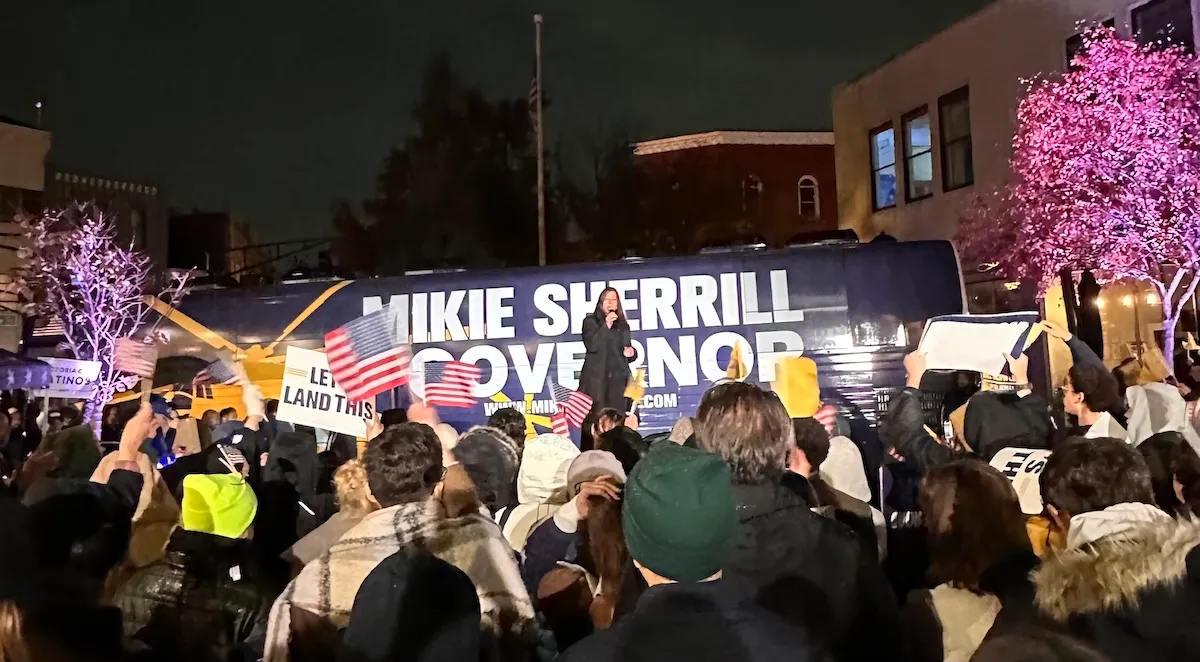
Photo Caption: Mikie Sherrill rally in Montclair, NJ. Andrea Doyle
Skift Take
The Republican mid-term convention in Dallas may not be a one-off. With coordination limits gone, expect political parties to detach from the presidential cycle — meaning convention centers and host cities need to start planning for political business in off-years, not just election years.

The Supreme Court’s 6-3 decision in National Republican Senatorial Committee v. Federal Election Commission eliminates federal limits on coordinated spending between political parties and federal candidates. This gives national and state parties greater flexibility to fund campaign operations, voter outreach, advertising, and events.
Bradley Honan, CEO and president of Honan Strategy Group, a political strategist and pollster, expects the ruling to lead to more political gatherings.
“We will see a significant uptick in the number of political events held, including conventions, mini-conventions, and get-togethers. More groups will be brought together, and there will be an acceleration in spending,” said Honan. “The smartest candidates and campaigns convene people. They bring them together.”
Honan said campaigns increasingly recognize the value of bringing supporters together in person. “People want to get off their phones, and they want to get together,” said Honan. “Trump is acutely aware of that. He has his finger on the pulse of this, and that is why he is having an off-year convention. This has never happened before.”
Although Trump’s Republican midterm convention was announced before the Supreme Court's decision, it illustrates political parties' willingness to invest in large-scale events outside traditional presidential election cycles.
While national party conventions traditionally occur every four years during presidential elections, Republicans are planning a two-day national gathering in Dallas on September 9–10 at the American Airlines Center. President Trump has described the event as a celebration of the party's agenda featuring elected officials, business leaders, entrepreneurs, first responders, and entertainment.
Political Meetings Expected to Increase
Honan believes there will be more campaign meetings, volunteer training sessions, donor gatherings, and strategy events, particularly in competitive states. He expects battleground states, including Nevada, Arizona, Georgia, Texas, and Wisconsin, to see increased campaign activity as parties invest more heavily in closely watched races.
Political events are often booked on short notice and require heightened security, credentialing, media facilities, flexible contracting, rapid logistics, and contingency planning. Those demands can create opportunities for hotels, convention centers, and suppliers experienced in managing high-profile events.
Joshua Grimes, principal at Grimes Law Offices and an elected commissioner in Lower Merion Township, Pennsylvania, said the ruling could boost spending on rallies and events. However, he expects social media advertising to absorb the additional funding as well.
“These days, increased amounts of campaign funding are spent on advertising on social media such as YouTube, Instagram, and Snapchat, and other ways to influence people who don't normally pay attention to conventional news sources,” said Grimes. “This doesn't mean that in-person political events will not continue, as they have in the past. But they will not increase proportionately with any increased spending.”