
Why Planners Should Be Watching the Winter Olympics Closely

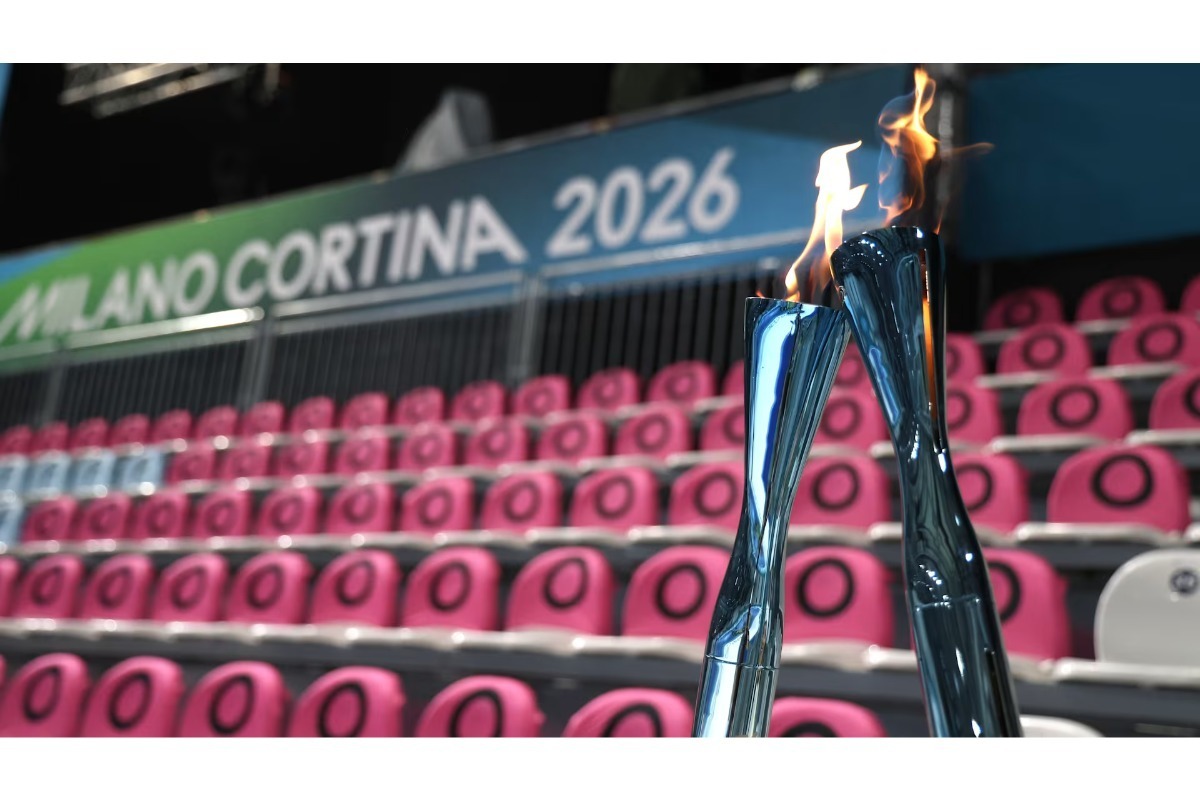
Photo Credit: The Olympic Flame arrives in Milan. Olympics.org
Skift Take
Organizers of the 2026 Winter Olympics are deploying predictive crowd tech, digital twins, and AI-driven operations to manage the sprawling, multi-cluster footprint — a real-world template for future mega-events.

Running February 6–22, 2026, the Milano Cortina Games will be the most geographically dispersed Olympics in history, spread across more than 8,500 square miles of Northern Italy. For instance, men’s Alpine skiing in Bormio is 162 miles from Verona, where the closing ceremony will be held in the historic Arena di Verona.
Several events will take place in Milan, including speed skating competitions held on temporary ice at Fiera Milano, Italy’s largest convention center. This venue selection reflects a broader Olympic shift away from permanent construction toward adaptable, temporary infrastructure.
With 3,500 athletes, 15 competition venues, two hub cities, and an estimated two million visitors, the Games present an operational challenge that traditional crowd-control methods can’t handle on their own.
While few events will ever approach Olympic scale, Milano Cortina 2026 offers a clear preview of how crowd management, safety, and space planning are rapidly evolving for meetings and conventions operating with far fewer resources.
Distributed Venues Force a New Operating Model
The Olympics have been moving steadily away from centralized stadium events. Paris 2024 demonstrated the shift by turning a six-kilometer stretch of the Seine into its Opening Ceremony venue, replacing a single enclosed stadium with a moving procession of boats carrying athlete delegations through the heart of the city.
Milano Cortina 2026 will take a different decentralization approach. While San Siro Stadium will anchor the Opening Ceremony, organizers will also stage three simultaneous ceremonies in mountain locations near competition venues. This allows athletes to participate without having to travel long distances immediately for next-day competitions.
This decentralized model reduces strain on athletes but significantly increases the complexity of transportation, security, communication, and crowd flow. Managing movement across cities, regions, and temporary venues requires far more than added staffing or perimeter fencing.
Past Games Pioneer Predictive Crowd Control
One of the big challenges of the decentralized model is risk management. The organizers are relying on real-time data to prevent problems from escalating.
Milano Cortina 2026 is building directly on these advances, but that shift began at Paris 2024, where organizers deployed dense networks of sensors across venues, including motion detectors, pressure sensors, Bluetooth beacons, and environmental monitors. These systems tracked crowd density, movement patterns, temperature, humidity, and air quality in real time.
Instead of relying on radio calls or manual observation, operations teams could see congestion forming in real time and intervene early. Entry points were adjusted, staffing redeployed, and routing modified proactively, rather than after crowding became a safety risk.
Tokyo 2020 laid the groundwork for this approach by pairing video surveillance with anonymized mobile phone location data. AI models were used to forecast congestion patterns and simulate routing changes in real time, marking a fundamental shift from crowd response to crowd prediction.
AI is also being used to power predictive safety systems. At Paris 2024, data from CCTV, environmental sensors, and public digital signals were aggregated to assess crowd density, movement, and behavioral patterns in real time.
Milano Cortina 2026 is advancing this approach through a centralized technology operations center developed with Deloitte. Acting as a digital nervous system, the center coordinates connectivity, cloud platforms, cybersecurity, accreditation, and results distribution, enabling organizers to anticipate issues rather than respond after they occur.
Digital Twins Can Help Event Planning
Digital twin technology emerged as one of the most transformative planning tools at Paris 2024.
Using OnePlan’s VenueTwin platform in partnership with Intel, organizers modeled complex temporary locations such as the Eiffel Tower Arena, Place de la Concorde, and Pont Alexandre III. Teams across 46 functional areas tested different configurations, weather conditions, and times of day within shared 3D environments.
Milano Cortina 2026 is extending this strategy with SimicoTwin, an Unreal Engine 5–based platform that fuses high‑fidelity BIM (building information modeling) models with live GIS (geographic information system) data. Organizers can test infrastructure and venue designs in ultra‑realistic virtual environments before committing resources on the ground.