The White House Wants to Approve Your Conference Attendance. The Events Industry Is Pushing Back.

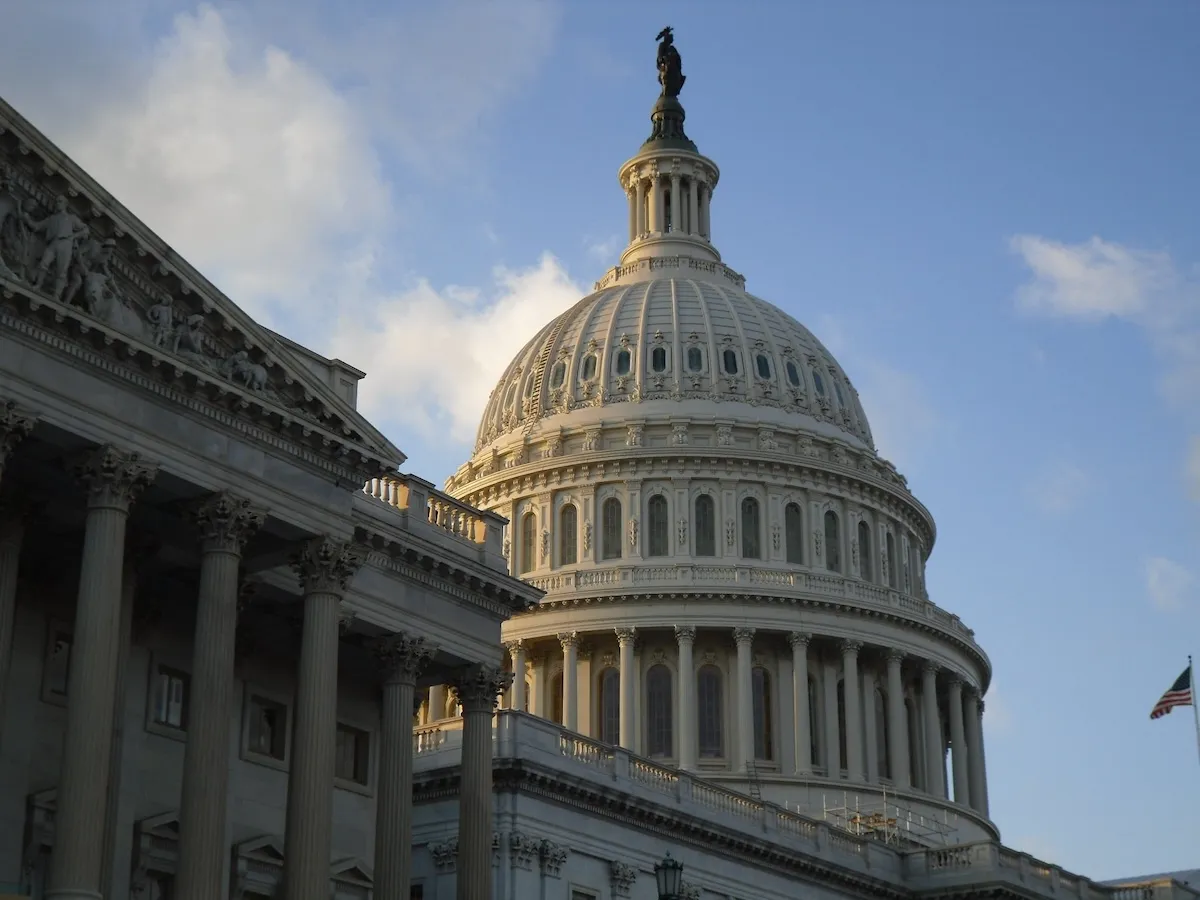
Photo Credit: The U.S. Capitol in Wasington, DC. envato
Skift Take
Washington's effort to rewrite federal grant rules is rippling through the events industry. Critics warn that requiring advance approval for conference travel would make collaboration less agile and leave smaller institutions without a seat at the table.

A sweeping proposal from the White House Office of Management and Budget (OMB) hopes to rewrite the rules governing more than $1 trillion in annual federal grants.
Events industry associations and the scientific community are pushing back, saying the layers of federal oversight added to conferences, professional memberships, and international research partnerships will be disastrous. The proposal, formally titled the Regulation for Federal Financial Assistance, is open for public comment until July 13. OMB intends the rule to take effect October 1 for fiscal year 2027 awards.
Conference Attendance Would Need Advance Approval
The provision drawing the most fire from the events industry is a new cost-allowability standard for conferences. Under current rules, conference attendance related to the work of a grant is a routine allowable expense. The proposed rule eliminates that presumption. "The costs for attending conferences are allowable only if participation in the conference is expressly approved by the Federal agency and included in the terms and conditions of the Federal award,” it states.
That means a researcher, university administrator, or nonprofit professional who wants to attend a conference using grant funds would need the agency to approve that specific conference before the award is made, not when the conference opportunity arises.
The Exhibitions & Conferences Alliance has submitted comments to OMB arguing the change would create friction in exactly the situations where flexibility matters most: conferences that emerge after a grant is awarded, or gatherings tied to fast-moving developments in a field.
Losing a Seat at the Table
The burden would fall hardest on smaller organizations that lack the discretionary funds to cover conference costs outside the award, according to ECA.
A separate provision would attach federal conditions to the way publicly funded venues provide services — security staffing, crowd management, facility access, insurance requirements, and fees. The venue provision has a specific political backstory: OMB designed it to stop public universities from charging higher security fees for conservative speakers — sometimes called "heckler's fees."
The rule's scope, however, extends far beyond campus speech disputes. It would apply to any public entity receiving federal funds, covering events on their property, regardless of whether those events are federally funded.
ECA argues these are operational and safety decisions that belong to venue managers, event organizers, and local public-safety officials who know the facility and the event, not federal grant administrators applying national rules after the fact.
ASAE is also reviewing the rule and plans to submit comments before the deadline.
Scientists See a Structural Threat
The American Physical Society (APS), joined by more than two dozen scientific organizations, has called the proposal an existential threat to U.S. science, a characterization that reflects not just the conference provision, but the cumulative effect of several related changes.
Under the proposed rule, professional society memberships would be allowable only if necessary to fulfill award requirements and receive prior written agency approval. Subscriptions to professional, academic, and technical journals would become categorically unallowable. Memberships in organizations whose primary purpose is lobbying or issue advocacy would also be prohibited.
APS argues that taken together, these restrictions would cut researchers off from the professional infrastructure — conferences, journals, societies — through which science actually advances.
The Association of American Universities, the Association of Public & Land-Grant Universities, and the Council on Governmental Relations are also sounding the alarm, warning that the restrictions are too broad. Rather than targeting verified risks in specific collaborations, they would constrain international research partnerships and co-publication of scientific work across entire categories of countries.
The American Geophysical Union has flagged the particular exposure for earth and space science, fields that depend on international datasets and satellite systems that no single nation can replicate.
Stand Up for Science has gone further, warning that the ban could effectively exclude U.S. researchers from major multilateral projects. The presence of a single researcher from a covered country in an international consortium could force federally funded American scientists to abandon the collaboration entirely.
Opposition is mounting ahead of the July 13 deadline. ECA is encouraging stakeholders across the meetings and exhibitions sector to submit comments.