Ruud Janssen

Skift Take
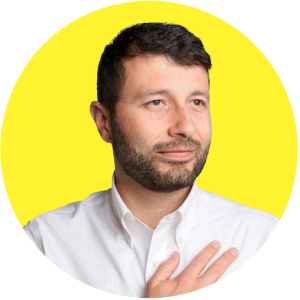
Ruud Janssen believes true innovation is about simplifying complexity and getting people to work together and urges all event designers to leave their ego at the door.

Ruud Janssen is an author, speaker, facilitator and researcher on event design, event ROI, virtual and hybrid events and innovation. His work is focused on helping event professionals design better events that lead to behavioral change using business and event model innovation.
Together with Roel Frissen he created the Event Canvas, a strategic management template for developing new or documenting existing events and conference models. International Olympic Committee (IOC), United Nations, IEEE, AO Foundation, MED-EL, PCMA, MPI, IMEX, Wikimedia Foundation, Heineken, Bayer, Google and the Internet Society are among those organizations trained on using the Event Canvas.
Janssen and Frissen, along with Dennis Luijer founded the Event Design Collective, an event design consulting & training firm with trainers and facilitators spread across the world, leading the implementation of the Event Canvas in different languages.
Meetings Innovators spotlights the trailblazers defining the future of meetings and events. Each month, we feature visionary professionals breaking the mold with innovative strategies, fresh perspectives, and bold ideas. These pioneers are crafting experiences that resonate, inspire, and lead the way forward. Join us as we celebrate the creative minds taking the future into their own hands and shaping what’s next in the world of meetings and events.
Meetings Innovators is sponsored by Marriott Bonvoy.
What does Innovation mean to you?
Innovation is making sense of complexity and creating clarity and putting where others only see confusion, being able to put your finger on where things move.
It's not just about new ideas because there's plenty of those. It is about creating frameworks where a group of people can act with more confidence together than if they would alone. It’s about mapping patterns and simplifying problems and building tools that allow you to do that in a way that you couldn't do before. That's the curiosity that drives the ability to take a challenge, peel it apart as a group of people and then use human intelligence and what we like to call augmented humanity. Have people augment each other to create something that other humans will enjoy when it comes to changing behavior.
Also, innovation mirrors society. Our society adapts to the things that happen to it. We've seen that in our lifetime, and the longer you're around, the more you see those abilities to adapt or to change to what's happening.
Events are like microcosms of the bigger world outside. An event demonstrates the culture of a company in a couple of days live with all the stakeholders in the same place at the same time. So they're really great petri dishes or MRI scanners of what's really happening in that company.
Why do events need innovation?
People get bored really quickly. Sometimes repetition gives comfort and sometimes repetition creates boredom. You have to find the fine line in between those two things.
If the group keeps changing you could keep doing the same thing, and you change different groups of people by doing the same thing over and over again. I see the example of Taylor Swift bringing her concert across the planet to different groups of people, yet my kids want to go five times to the same concert.
One thing creates a conditioning, the other thing creates a marketplace. Sometimes you can do both.
Who has inspired you to become an innovator?
The biggest inspiration was when I met Alexander Osterwalder at an MPI board meeting in Vancouver at the World Education Congress. He came to talk to us about how businesses create value and showed us that you can take a phone book PhD, hit it over the head and turn it into a single page as a mental model. It took me a while to wrap my head around that, but it ended up becoming one of the core motivators to figure out in our discipline.
The ability to have a group of people think differently and collaborate in the same language on a common outcome applying design thinking and design thinking is not something we invented that's been around for a long time. But the dynamic environment of events where data and measurability is so difficult. I think that's what inspired me to do what we do.
Where do you look for innovation away from events?
I'm fascinated by good design in things. Design is addictive because it's something that gives you a smile in your mind. So it’s essential to be inspired by those things and to keep exposing yourself to them because and not just stare down your own navel and be only at events about events all the time. It's important to be exposed to different things.
I get really inspired when I go to things like the Vitra Campus here close to Basel where somebody was building furniture under a license and all of a sudden it was the springboard for some of the world's major architects. By allowing them some space to show their craft on a small scale, now it's become a pilgrimage place for designers and architects.
Also, if you travel to different places you naturally see the deltas when you go to different points in time. You see what changes in that place at large in a complex context. That, I find super inspiring.
How you think about getting buy-in?
People love their events and they love the decisions they take about them. And so making my idea a shared idea, that's one of the hardest things to do. Everybody's convinced about their own kind of drive and their own thing and pushes that. And the more you push it onto others, the harder it is to get buy-in. So, it's about deconstructing the push and turning it into a pull where people want to become part of something. And then the buy-in process grows naturally. When people feel that ownership because they created it together, you're already more than halfway there.
We wrote a book called Design to Change, which is about those conversations to get buy-in from event owners about the event designs that a group of people spend time on creating. Becoming good at that is really hard because people are really close to their events.
The art is involving your event owner just enough at the right times for them to validate your thinking. And so they know the amount of work that went into it, so you cannot be taken for granted. If you build it with a group of people, the truth becomes a common truth. You jointly discuss the options and your joint recommendation. It becomes a shared responsibility.
The hardest thing is going from my idea to your idea, and a shared idea to a shared design. Our design process has many validation moments to break down that decision into smaller decisions, which makes them easier to take. When stakeholders co-design and listen to the event owner's challenge, you're involving a diverse set of people to roll around in the problem long enough so you look at it from different perspectives.
How Do You Get Buy-In from Unengaged Decision-Makers?
If you say, “Do you want to take a peek in the cockpit of the airplane?” Most people won't say no. People love events. It's very personal. So they tend to want to have a say.
It's all about the art of what we call 80% mystery and 20% clarity. If you create enough mystery, people are looking to unravel the mystery and make it their story. Ultimately, there comes a point where they're interested in it. It's all about the timing on when that is, so you have to find that cadence and then you have to step in at that moment and be ready to present options or to show the work that underlies the actual design that you're doing.
If somebody doesn't want to get involved it’s because they don’t have skin in the game. The event won’t enhance their reputation if it goes well, or create pain for them if it doesn't go according to plan. Making people complicit is an art in itself but it's also a lot of fun.
What is the role of failure in innovation?
We had a client ask us that very question, a highly technical photonics engineer. He asked, “What are the top three reasons why events fail?” We don't know what the top failures in events are because it's hard to ring fence and quantify. The surprising fact is when you ask the question, most people react, “but my event doesn't fail!” They feel personally responsible for the success of an event. Their biggest challenge is facing failure in the eye or just naming it and then dealing with it in a different way.
It's really hard for people to admit their failures or to contribute to them. But because we didn't have an answer, we started developing a diagnostic around it and analyzing event failures. It’s a diagnostic on competency because people equate failure with the lack of competency, which it's not. It's just an incident. But it is super important. We have to document it and we have to get our act together in this industry, otherwise others will.
What’s Your Advice to Aspiring Innovators?
The biggest power of a good event designer is not knowing. So they are perfect for the job. I'm really encouraged when I see bachelor's students, associate degree students, master's degree students learning about event design without having had their feet in the clay, they are some of the best designers because they don't worry about how difficult the execution or delivery is.
Give any design challenge to any events agency or team, and I'm always surprised by what they can pull off. So delivery is not the problem. It's about the carefree creation process. And I think aspiring innovators are perfect for the job. But it does help when they do have some mentors and event owners around them for reality checks at the right given times.
So, start small, prototype fast, share generously, and have a methodology that you scale to others. Innovation is a team sport. So also build a team of people that can do it with you.
What would you like to be known for?
I'd like to be known for nothing. That's why our name is no longer on the event canvas. It's like the creator of sheet music. Do you know who created sheet music? No. And that's not important. It's what people do with it that's important.
We'd like to equip people with a common language to design for events right. If the tool becomes the thing that people point to as something that helps them create events as a team, that's the biggest compliment we can have, especially if people use it without our help. We're far from that. We still have to travel the globe and do it with people, help them and support them.
The canvas as a structure will be remembered. It's an anonymous piece of work. Because sometimes ego gets in the way and that's when design doesn't work. It's not about an ego. If it helps event owners and event designers think differently then I consider what we've done to be meaningful work.