
Ebola Outbreak Impacting Events Across Africa

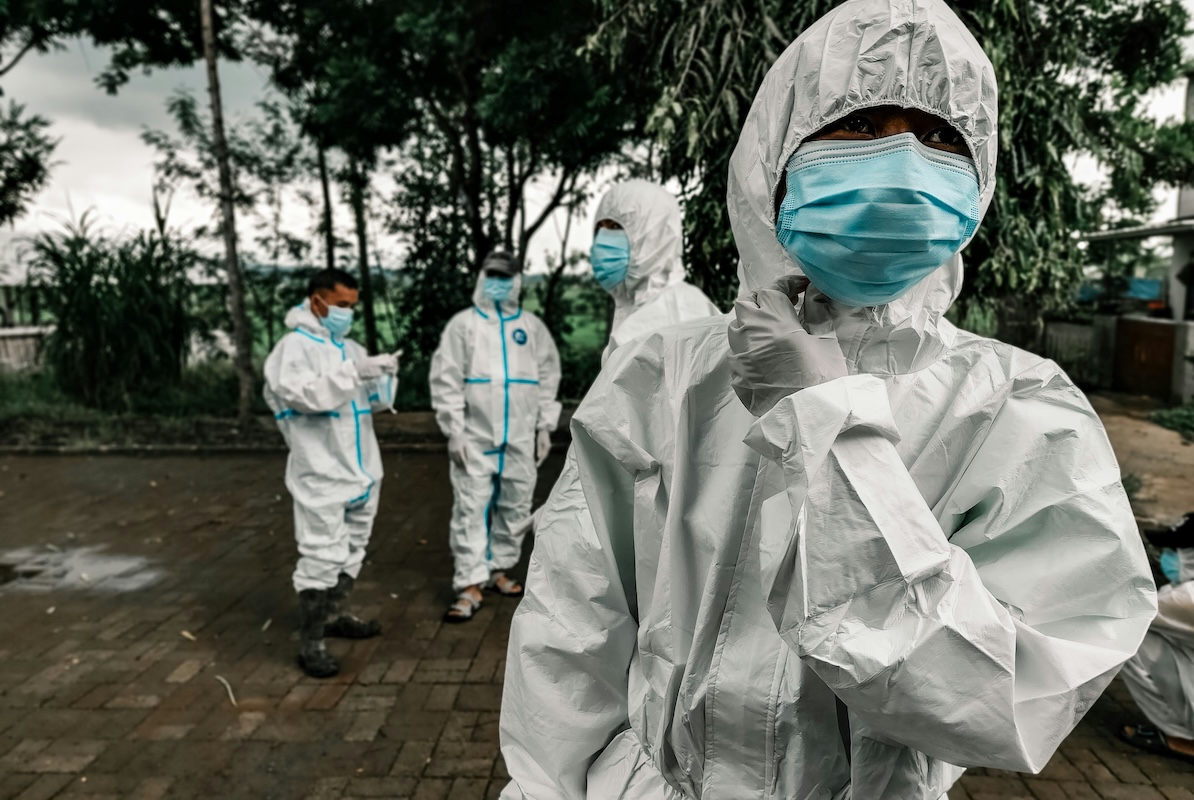
Photo Credit: Ebola outbreak. Unsplash / Gani Nurkahim
Skift Take
This week’s cancellation of a prominent African financial conference comes as confirmed Ebola cases surge, raising questions about whether more meetings will follow.

Business events are starting to feel the impact of the Ebola outbreak with the cancellation of the 33rd Afreximbank Annual Meeting (AAM2026), one of Africa's most prominent financial gatherings. The conference, which was due to take place June 21–24 in the Mediterranean resort city of El Alamein, Egypt, was expected to attract investors, policymakers, bankers, and business leaders from across Africa.
The decision to cancel was made by Egyptian authorities and the African Union due to public health and safety concerns about the Ebola outbreaks in Democratic Republic of Congo (DRC) and Uganda.
The World Health Organization (WHO) has declared the outbreak a Public Health Emergency of International Concern. This week saw a surge in the total number of confirmed cases to 837 in the DRC and 19 in Uganda.
The WHO has also warned that the virus is still “increasing in its geographic spread."
The Cairo–based Afreximbank (also known as the African Export–Import Bank) had chosen the theme of “Intra-African Trade and Industrialization: Pathway to Economic Sovereignty” for the event. The agenda included discussions on trade, industrialization, investment, infrastructure financing, and the implementation of the African Continental Free Trade Area (AfCFTA).
Last year’s meeting in Nairobi attracted 8,000 participants, including heads of state and business leaders, with deals signed between the bank and various entities expected to result in $1 billion in investments.
The Afreximbank cancellation follows a decision to “indefinitely postpone” the fourth India-Africa Forum Summit (IAFS-IV), also due to Ebola risk. It had been scheduled to take place in New Delhi May 28–31. The last IAFS was also held New Delhi more than a decade ago, in 2015.
Spreading Impact
The DRC has seen repercussions around its first World Cup match in 52 years, taking place June 17 in Houston against Portugal.
The Centers for Disease Control and Prevention (CDC) required the DRC delegation and staff to quarantine in Belgium and to be symptom-free for 21 days before entering the U.S. Fans from the DRC were banned from entering the U.S.
Due to Ebola concerns, the international friendly football match between the DRC and Chile was moved from Marbella, Spain to Orléans, France, where it was played on June 9 without spectators.
The crisis is also affecting tourism across East Africa, according to Keith Vincent, CEO of Wilderness, one of Africa’s leading safari operators.
“It hasn’t crossed the border out of the Congo, Uganda, and Sudan, but the world seems to punish us because it’s so scary,” he said. “Africa is still treated like one place, when in reality, it’s a massive continent with a huge range of experiences.”
Henk Graaff, managing director of SW Africa, a destination management company based in Johannesburg, has not experienced any direct cancellations due to the outbreak, but has noticed a “slight slowdown” in new RFPs.
“We are aware of at least one group that recently opted for a destination closer to Europe over Southern Africa,” he said. “However, it is difficult to isolate the cause, as this could also be attributed to general market uncertainty and the increase in airfares resulting from the current situation in the Middle East.”