
Clare Melton: Great Leaders Create Successful Employees

Skift Take
For this long-time leader, the highlight of her career hasn't been the events she's led, but the people she's helped succeed.
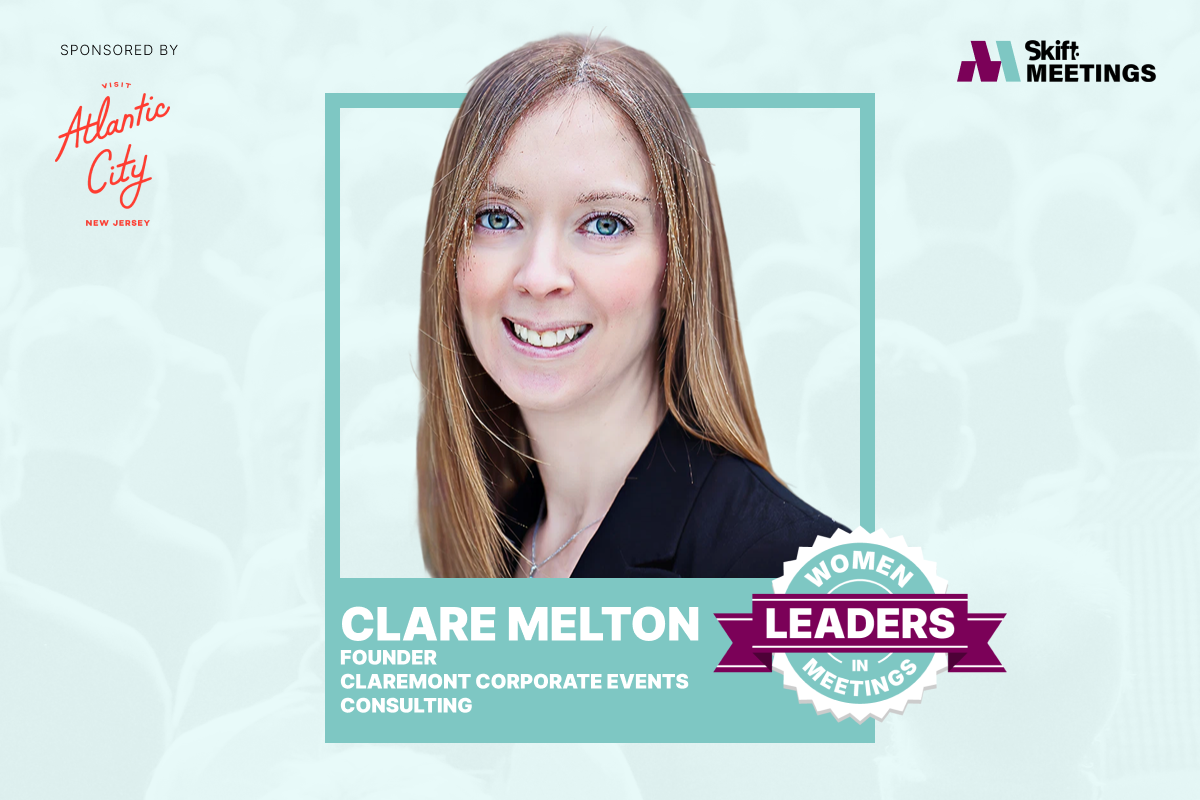
Clare Melton, who founded Claremont Corporate Events Consulting last year, has been leading teams for 15 years. Previous roles included leading teams at Advent, S&P Global, IHS Markit, and CBRE in the U.K., where she resides.
She views mistakes as learning opportunities, but she feels strongly that her team members should be developing and growing every single day of their careers. If that means they eventually end up in positions alongside or above her, she considers that to be “the greatest compliment.”
Skift Meetings had a chance to sit with Melton, one of our 2026 Advisory Council members, to learn more about her views on leadership.
Skift Meetings: How would you describe your leadership style?
Clare Melton: I always use the expression “firm, but fair.” I think you have to treat people on your team like grown-ups.
Everyone aims to do a good job, and the leader needs to provide the environment and the tools — both physical and emotional tools — for them to show up and be their best.
No one comes to work to mess up. When there’s an issue, it's important to provide a framework of support that helps people understand and grow from it.
How has your leadership style evolved?
I've tried to develop my style over the years. Covid had a huge impact on leaders and how we treat our teams. With everybody being remote, teams have become a lot less hierarchical.
For the first two years, everyone was in their own house; they weren't at the desk right next door so you could see what they were doing. You couldn’t hear conversations, and you couldn't correct them in the moment. Leaders had to become more intuitive and trusting.
In events, everyone has something they're supposed to deliver. If you’re the missing cog in that machine, it becomes immediately obvious.
Tell us about the leaders who inspired you.
I’ve probably learned more from the bad leaders I’ve worked for than from the good ones. There are people you work for where you think, “I never want to be that person.”
The most inspiring leaders were very authentic and open. They would talk to you as a human being. They wanted you to succeed.
The mark of a good leader is wanting your team to move past you. I’ve seen leaders before who appear almost insecure when they see people on their teams get promoted around them or above them. I think that's the biggest compliment I could receive as a leader — seeing someone I brought into my team and coached grow in ways that I never could have imagined.
It’s about being secure in your own ability and realizing that you’ve gotten where you are through your own merits, then allowing the people around you to grow.
Have you had mentors in your career?
Not formally, but now I look back on relationships I've had and can see there were people who mentored me. At the time, I didn't even realize that was what was happening.
The strength of our industry’s mentoring networks is phenomenal. I have been a mentor for a group in the U.K. called Elevate for the past three years. They just started a U.S. chapter.
It can be incredibly helpful to be mentored by someone who doesn't work with you, doesn't know you personally, or isn't even in the events industry. They can view your business, your challenges, and your goals through a different lens.
Reverse mentoring is important too. I've learned so much from people on my team who are 10 or 15 years younger than I am. Just because I’ve been around longer than many people on my teams doesn't mean I don’t have things to learn.
Senior leaders who find their careers stalling are those who think the way they've always done things is the way that they have to do it for the rest of their days. You need to be open to development opportunities — especially now.
What is your advice for leading next-gen employees?
AI will change their careers in ways that we probably can't even conceive of. They need to get ahead of that by understanding the tools and how to use them in their jobs.
The people who are going to struggle are those who can't apply AI to their roles. It's really about building your industry knowledge so you can stay ahead of the technology.Great
It’s not about how you think AI is going to control you, but how you can use it. It’s just a tool, but a very powerful one.