
Police Eject Attendees From Diabetes Conference — Did the Association Go Too Far?

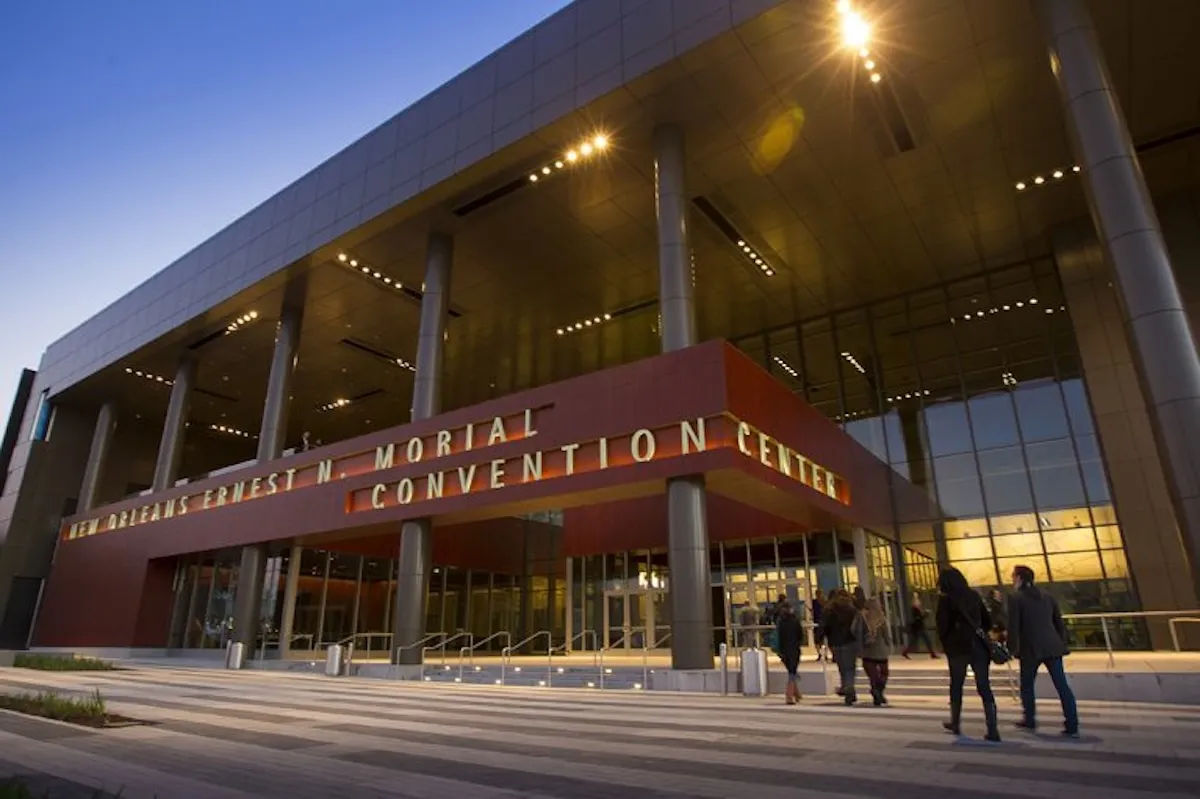
Photo Credit: ADA attendees were escorted out of the New Orleans Convention Center. New Orleans Convention Center
Skift Take
As meetings become increasingly vulnerable to political tensions and activism, planners are forced to decide where to draw the line between free expression and disruption.

On June 5, The New York Times reported on the removal of several researchers and physicians from the American Diabetes Association's (ADA) 2026 Scientific Sessions in New Orleans. The tussle led to a debate over how far meeting organizers should go in enforcing event codes of conduct and where the line sits between protest, political expression, and attendee conduct at conferences.
Videos published by MedPage Today show a tense confrontation between researchers, security personnel, and law enforcement inside the New Orleans Ernest N. Morial Convention Center. No arrests were made, but the researchers were banned from attending the meeting.
"Troopers working a security detail at the convention center during the American Diabetes Association conference were requested by event organizers to assist with removing several individuals from the event," said Sgt. Jacob Pucheu of the Louisiana State Police. "No arrests were made, and all individuals left peacefully."
The researchers said they were being censored for handing out copies of an editorial criticizing the Trump administration's impact on scientific research. The ADA said the removals were based on violations of conference policy, not the content of the materials being distributed.
In a statement to members and attendees, ADA leadership said its longstanding policy requires prior authorization for distributing materials and limits such activity to designated areas within the exhibit hall.
"Importantly, these actions were taken because of the violation of conference policies regarding unauthorized distribution of materials — not because of the viewpoints expressed in those materials," the organization said.
ADA Execs Resign
The incident has led to the resignation of ADA President-Elect Jennifer Green and Scientific Sessions Planning Committee Chair Mark Atkinson from their positions, according to MedPage Today.
Professional gatherings are private events, but take place in public-facing, politically charged environments. That raises the question of when does attendee expression become disruption, and when does enforcement risk appear like suppression?
In a second video published by MedPage Today, one of the doctors who was removed complained about being censored.
Attorney Joshua Grimes, president of Grimes Law Offices, said the issue is less about constitutional free speech protections and more about clearly defined and enforceable conference policies.
Was Code of Conduct Broken?
The ADA attendee code of conduct prohibits "disorderly or disruptive conduct such as protesting" and states that violations may result in removal from the meeting without a refund.
"Therefore, it appears that ADA officials' action in removing the protestors was permissible," Grimes said.
Where the line is drawn is a separate call.
Grimes said every organization should decide whether to allow protest and other expression at its events. Some groups, he noted, may want to prohibit off-script activity altogether, while others might benefit from spontaneity and debate.
What matters, he said, is consistency. "The keys to an effective code of conduct include creating a well-thought-out policy, so that all attendees can be made aware of behavior that's permitted and what's prohibited, and enforcing that policy when violations occur," Grimes said. "Without enforcement, a policy is frequently useless."