
How Meetings Are Being Redefined Around Intentional Moments

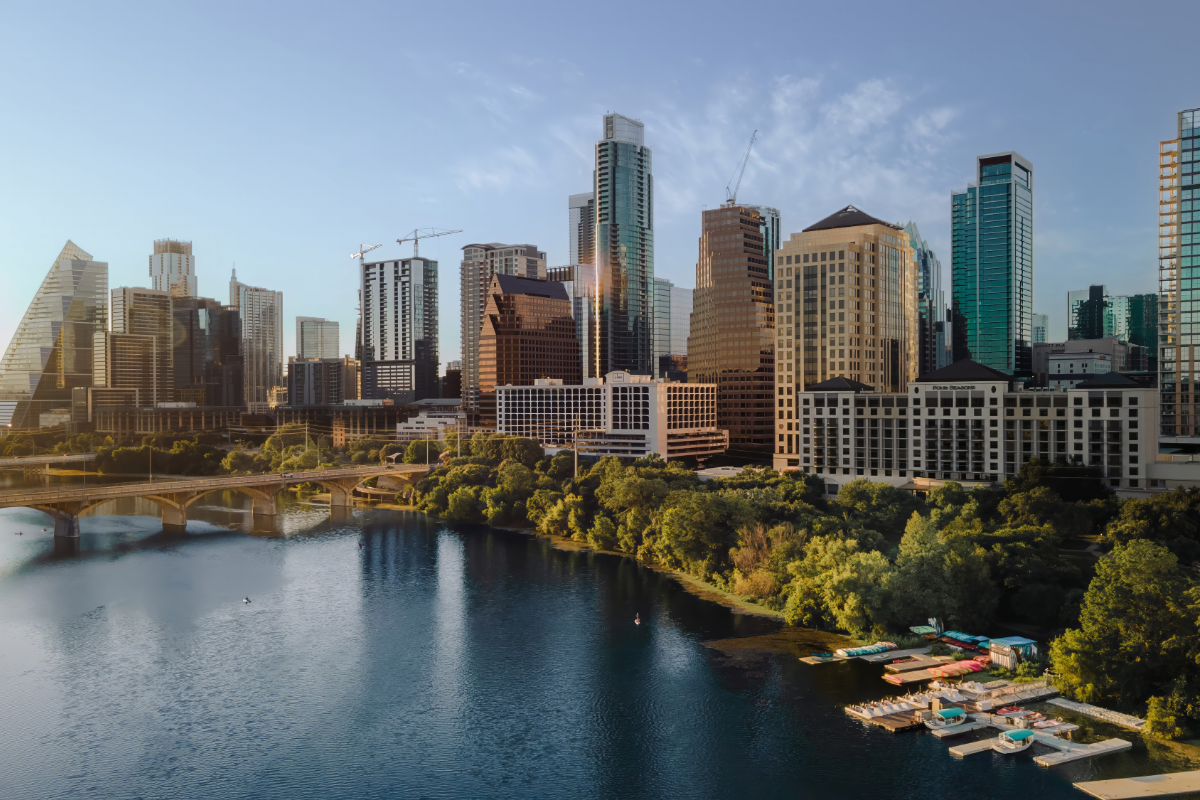
Photo Credit: Downtown Austin skyline. Visit Austin / Paulina Skarbowska Wiewior
Skift Take
More planners are focused on what can happen between sessions and venues. Austin’s past year of hosting more than 1,100 meetings without a convention center offers a blueprint for building better experiences around those moments.

Rewind to the spring of 2025 in Austin, Texas, and one big question loomed: What would the city feel like without a regular influx of attendees and exhibitors each week?
It was a question that begged to be answered. Austin has soared in popularity for large-scale meetings and events, but the city’s convention center, which last went through an expansion in 2002, could not keep up with the demand. The building closed its doors in April 2025 to make way for a much-anticipated new and larger building set to open in 2029.
“There was an assumption early on that the temporary closure of the convention center would significantly impact Austin’s ability to host meetings and events,” Dane Piper, vice president of destination services at Visit Austin, said. “While some programs require a centralized hub for their event design, groups with more flexible formats have embraced experience-driven approaches across the city.”
Over a year and more than 1,100 meetings later, tourism leaders in Austin have not only proved that assumption incorrect — they have demonstrated an industry-leading level of creativity to host successful events with or without a singular, centralized venue. Piper has noticed a shift in how planners approach the space between venues as an opportunity to embrace rather than a logistical challenge.
For example, one recent group hosted a campus-style program at two downtown hotels. The organizer hired a local vendor to serve snow cones along the walking routes, and Visit Austin assisted with sourcing additional security and collaborating with the city to ensure safe crossings.
“Those could have been friction points,” Piper said. “Instead, they became part of the experience. The construction hasn’t gone away. We’ve just changed how people experience the city around it, and planners have been more open to that than expected.”
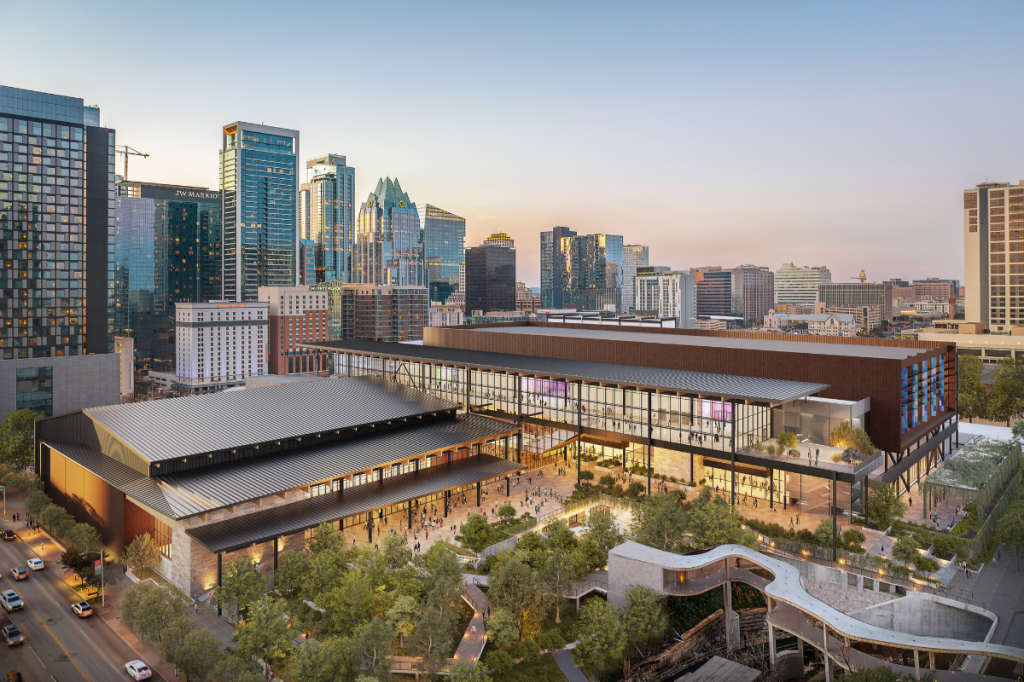
That openness is creating more than an immediate payoff, too. It’s already shaping how planners are thinking about Austin's next chapter, which includes a $1.6 billion convention center that will double the city's capacity by 2029.
The Ecosystem That Makes Austin’s Convention Scene Work
Before the construction crews arrived, Austin had enjoyed a steady climb up meeting planners’ shortlists, fueled by its position as a technology and creative hub. When PCMA hosted Convening Leaders in Austin in 2017, the organization set a new attendance record, and AfroTech attracted more than 25,000 participants, making it the country’s largest conference of Black innovators and entrepreneurs.
The convention center played a key role in the success of those programs, but Piper explained that it was merely one piece of the puzzle.
“Austin has never been a one-trick pony,” he said. “The convention center matters, but it is one part of a much larger ecosystem.”
That ecosystem includes a diverse mix of venues. Planners can utilize the Palmer Events Center, a 70,000-square-foot venue located just over the Colorado River and less than one mile from the majority of downtown hotels, or host intimate daytime sessions at The Cathedral, a converted 1930s church northeast of downtown, for up to 250 attendees. Meanwhile, Circuit of The Americas, the site of the annual Formula 1 US Grand Prix race and located just two miles from the airport, offers opportunities to combine strategy sessions with high-impact driving experiences.
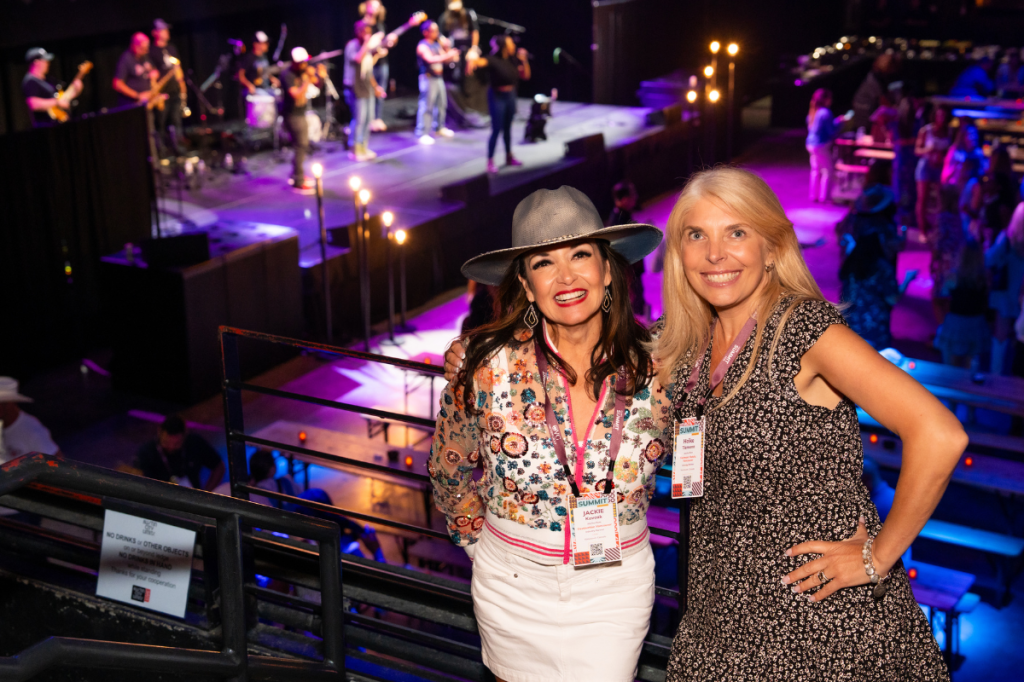
In addition to venues that can offer new approaches to experience design, local event professionals have a proven track record of introducing attendees to the only-in-Austin spirit. At the Corporate Event Marketing Association (CEMA) Summit, Austin-based Fifth Street DMC transformed the ACL Live at Moody Theater music venue into a vintage dive bar, complete with neon signs, branded matchbooks, pool tables, and ashtrays.
“It wasn’t overproduced,” Piper said. “It felt lived-in and authentic, which is exactly what the group was looking for.”
The summit, which took place a few months after the convention center closed, set a new attendance record and reinforced a key lesson from Piper’s 15 years of bringing business to the city.
“When planners lean into what makes Austin different, the experience gets stronger,” he said.
Designing for What People Want to Do: Move
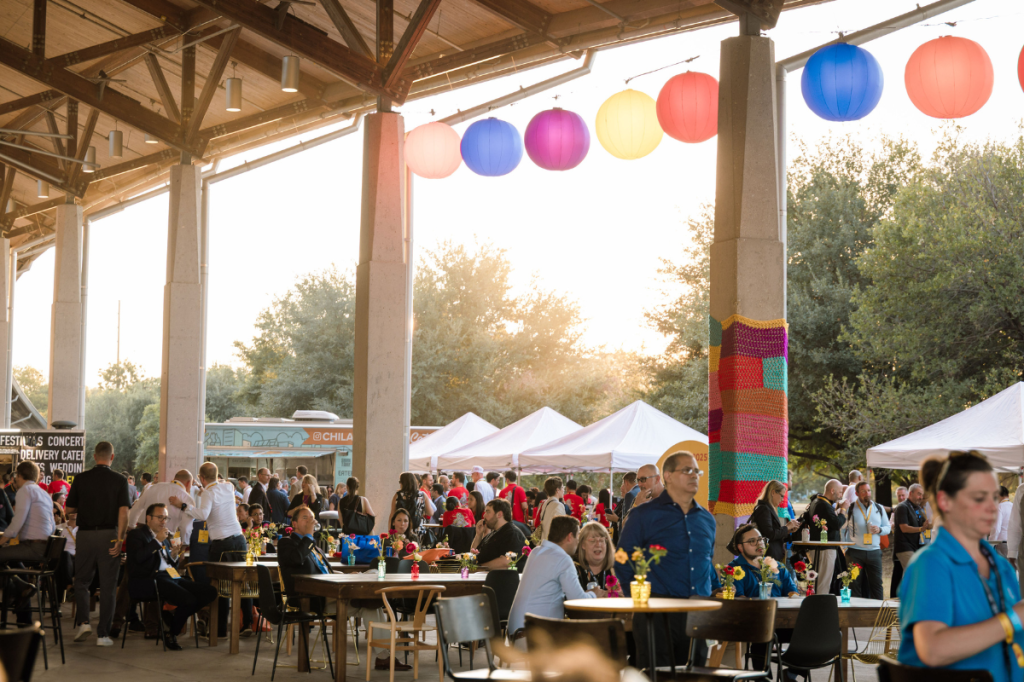
In October 2025, DHL put those points of differentiation in the spotlight for over 500 senior leaders from around the world. The company’s annual Now & Next summit embraced a campus-style program that featured a cluster of six venues. Participants attended masterclasses at the Palmer Events Center, sipped cocktails at Malverde on 2nd Street, listened to local musicians at Pete’s Dueling Piano Bar, and more.
“We wanted to design an experience that reflects how innovation and collaboration naturally happen, through movement, connection, and discovery,” Liz Perout, global events manager at DHL, said. “Now & Next allows guests to explore multiple spaces, sparking conversations, ideas, and perspectives throughout the day.”
The impact of that kind of movement is becoming a critical piece of every event’s success. As attendees voice frustration with too many sessions and commitments, planners are recognizing the value in built-in flexibility to explore and create organic connections that make meetings worth attending.
One program that has always encouraged the freedom to explore is Austin’s most famous event, SXSW, where pop-up parties, artist showcases, and film premieres take place throughout the city. The annual celebration of music, innovation, and culture has historically used the Austin Convention Center as an anchor, but the decentralized approach at its most recent edition reflected the city’s ability to fuel discovery. From live music in the Red River Cultural District to off-road Rivian test drives on Congress Avenue, the conference and festival felt like it always does — minus a central hub.
“The mix of unexpected activations and high-profile moments is what gives SXSW its energy,” Piper said. “The convention center was never the only driver of that. The city is.”
That same urban edge contributed to DHL’s success during Now & Next.
“Austin embodies everything Now & Next stands for: innovation, progress, and forward thinking,” Perout said. “It’s a city where technology and creativity intersect with real-world impact. Austin is a city that invites conversation, connection, and forward momentum.”
What Comes Next for Austin
Across Austin, that momentum continues to grow. By 2029, the downtown construction site will reveal a new, $1.6 billion convention center. The new zero-carbon-certified 620,000-square-foot venue nearly doubles the old building’s rentable space, allowing Austin to host significantly larger groups while staying true to the city’s natural and cultural characteristics. What’s outside the space is equally exciting. Piper said the ability to host open-air receptions is changing how planners are thinking about receptions and networking environments.
“The conversation has shifted beyond square footage. What gets planners engaged is how that space can be used,” Piper said.
Plenty of planners are already designing experiences in the new environment: Nearly 30 groups have already booked business in the new center. Expect more to come, too. Research conducted prior to the project showed that more than 20% of meeting planners ranked a convention center expansion as the number-one improvement to make in Austin. The finished facility will be able to accommodate a much larger number of attendees.
While those big crowds will be impressed by the bigger and better venue, they will have plenty to explore across Austin’s eclectic neighborhoods, too. The entire city is writing a bold new chapter marked by major investments from companies including Oracle, Apple, Meta, and Charles Schwab, alongside a wave of entrepreneurial startups in a variety of fields.
The city’s tourism infrastructure is keeping pace. Austin-Bergstrom International Airport will soon see 32 additional gates, part of a massive $5 billion expansion that is enhancing the arrival and departure experience and adding new routes. The city’s light rail will soon begin a 10-mile expansion, so attendees can conveniently explore more of the city.
Austin’s culinary scene adds another layer to the attendee experience. The city now has 47 Michelin-recognized restaurants, giving planners more options for off-site dining and group experiences and attendees more reason to stay longer. Visit Austin’s visitor profile research shows that 40% of attendees book extended stays in Austin, a sizable uptick from the 15% average across the meetings industry.
It all points to a story that goes beyond the anticipation of a bigger convention center. Austin offers a model as a destination that empowers meeting planners with the tools needed to design transformative, flexible, and impactful programs.
“This is not a ‘wait until 2029’ story,” Piper said. “The hotel package is already strong, and there is continued investment across the city. Throughout Austin, new developments are building on our city’s unique spirit and delivering an even better attendee experience.”
For planners, the real story isn’t just the square footage on the way. Instead, it’s about the city that's already there and the strategic investments for the future of meetings.
To learn more about what’s happening now in Austin and what’s next for the city’s convention center expansion, visit austinmeetings.org.
This content was created collaboratively by Visit Austin and Skift Studio.