Private Equity Has Discovered the Events Industry — Now What?

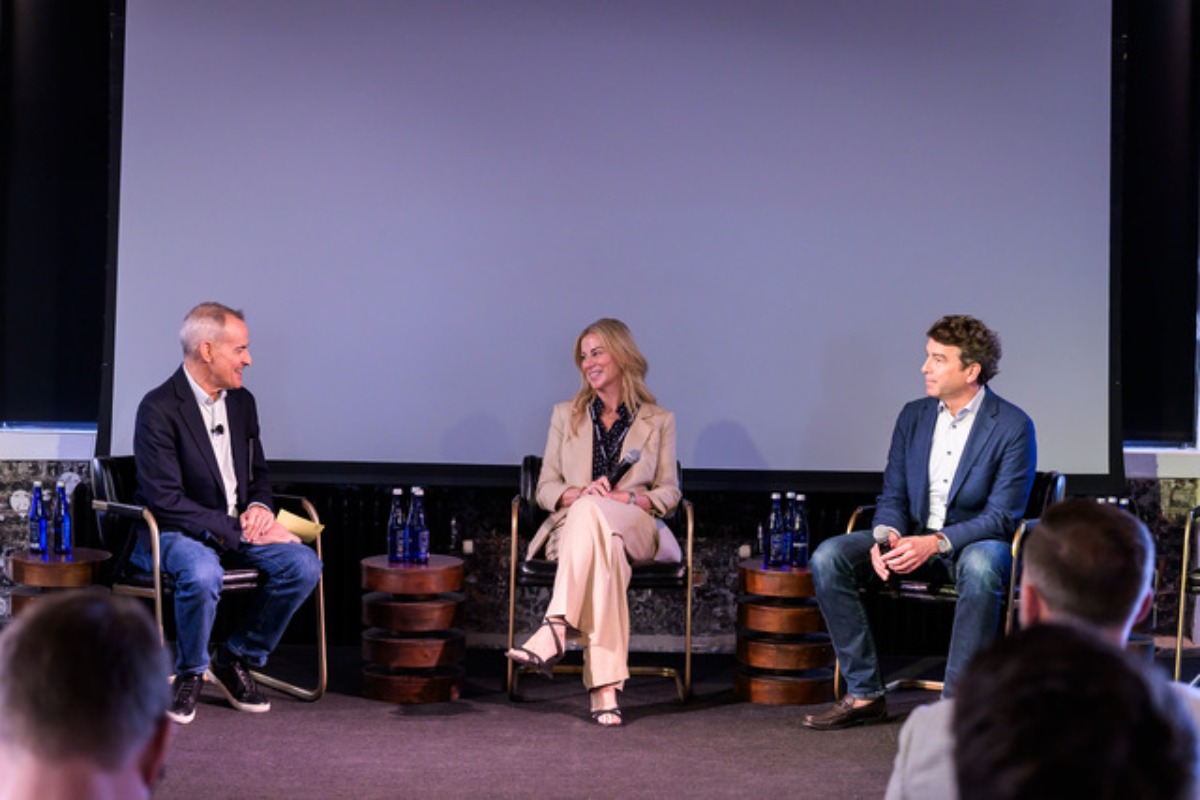
Photo Credit: Howard Givner, Maureen Ryan Fable, CEO of FIRST, and Ben Erwin, CEO of Encore discuss the anatomy of a deal Howard Givner
Skift Take
Private equity firms see the fragmented events industry as ripe for consolidation. The challenge is turning relationship-driven companies into scalable financial assets without losing what makes them work.

Nearly 100 CEOs of experiential, meetings, and incentive agencies gathered at NeueHouse Madison Square in New York City for the inaugural Event Agency C-Suite Growth Summit, created by Howard Givner, CEO of Heathcote Advisory Group in partnership with micebook. The event brought together founders from across the U.S., Canada, and the U.K. for a series of candid discussions about growth, succession, and the accelerating pace of mergers and acquisitions.
Skift Meetings attended the summit under the Chatham House Rule.
“The level of M&A activity now is almost unrecognizable from what it was even two years ago,” said Givner, who also advises on M&A as a senior advisor at investment bank Oaklins DeSilva+Phillips.
Givner is currently advising six attendees, who are at various stages of transactions, he said.
For most people in the room, the question is no longer whether consolidation is coming to the meetings and events industry. It is the role they want to play. But beneath the optimism is some anxiety about what institutional capital means for an industry built on relationships and creative autonomy.
Why Investors Are Circling
The events industry is dominated by independent, founder-led companies specializing in meetings, incentives, production, and experiential marketing. For investors, that fragmentation presents a classic roll-up opportunity: Acquire high-performing firms, integrate operations, and build larger platforms with greater scale and profitability.
“Some of the sectors that were darlings are no longer as attractive,” said Givner. “Events are getting much more attention.”
Agency leaders at the summit agree that live events have become more important, not less. As one attendee put it, AI is making face-to-face interaction “far more valuable. What technology cannot replicate is the trust, emotion, spontaneity, and relationship-building that happen in person, he said.
Recent deals are starting to reflect that. In May, Apollo Global Management announced plans to acquire Emerald and Questex to create one of North America’s largest business events and media platforms. Other recent transactions include Nth Degree’s acquisition of INVNT, EagleTree Capital’s acquisition of Opus Agency, Brands at Work’s acquisition of Chorus, and MC&A’s investment in Imprint Events Group.
The 700-Deal Filter
Investor interest, however, should not be confused with investor readiness to buy.
One private equity panelist at the summit said his firm evaluates between 700 and 800 potential acquisitions each year, and closes three to five. That ratio, roughly one deal for every 175 it looks at, is a useful reality check for agency founders who assume that interest translates into offers.
The companies that make the cut tend to share a common profile. Recurring revenue, long-standing client relationships, experienced management teams, and clean financial reporting.
Firms serving the healthcare, B2B technology, and association markets are considered especially attractive because of their stable demand and specialized expertise.
What disqualifies most agencies is equally specific. Margins are thin. Revenue is cyclical. And in an industry where client loyalty is with a producer or account lead rather than the agency itself, there is the risk of key-person dependency.
More Than a Financial Decision
What founders want from a private equity partner goes beyond capital. Operational support, stronger leadership infrastructure, and access to acquisition resources without absorbing all the risk themselves. Some want to stay on to run the business. Others are ready for a clean exit.
"There are a lot of people who love the craft of what they do," Givner said. "They're just tired of dealing with payroll, HR, marketing, and all the infrastructure."
Not everyone in the room is ready for a deal. Some remain committed to independence, skeptical of outside capital.
A question that surfaced repeatedly: “Can a business built on creativity, customization, and human relationships be turned into a predictable financial asset?”