
Can a Small City Handle a Big Conference? Maastricht Puts Itself to the Test
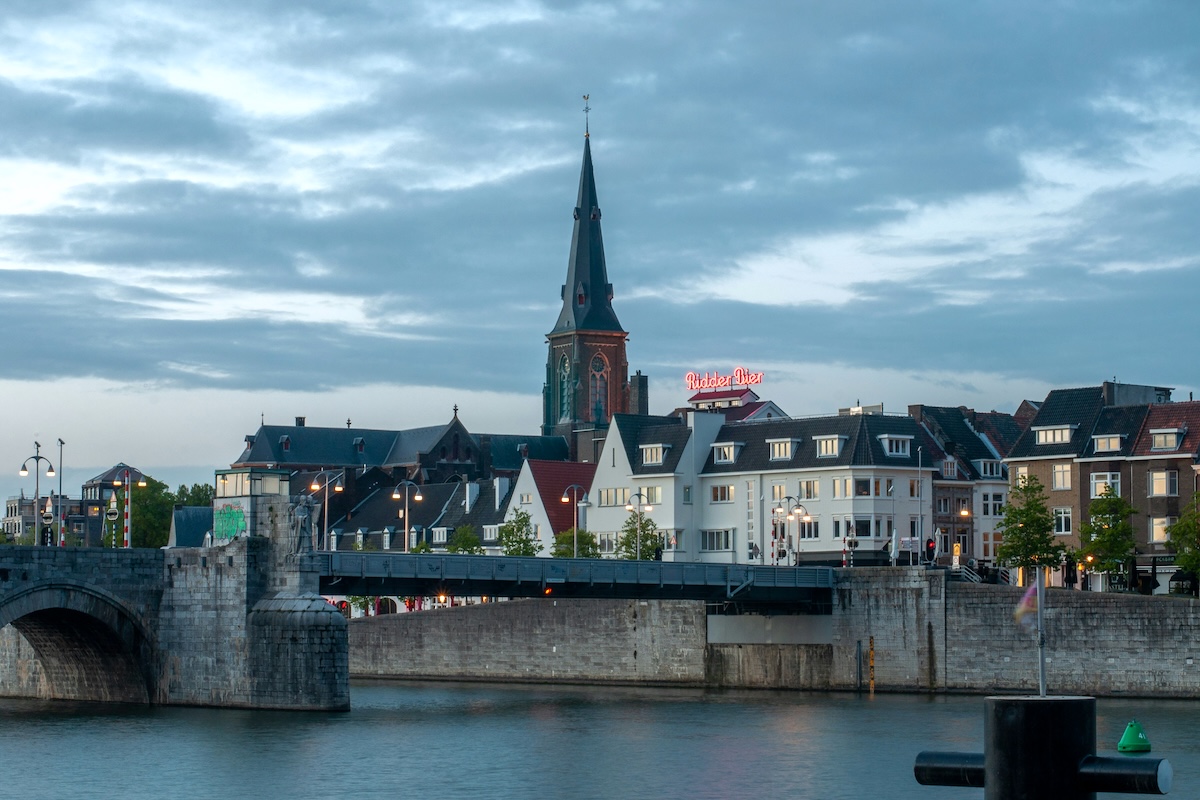
Photo Credit: Unsplash / Giu Vicente
Skift Take
The European Stroke Organisation has hosted its last five conferences in Helsinki, Basel, Munich, Lyon and Milan. This week it’s gathering somewhere much smaller — and harder to reach.

The 12th European Stroke Organisation Conference (ESOC) opened today in Maastricht. It’s the largest medical-life sciences event the southern Dutch city has ever taken on with around 4,200 delegates joining from across Europe and beyond.
The city has a population of 126,000, including around 19,000 students enrolled at Maastricht University. It's best know for the Maastricht Treaty that officially established the European Union (EU) and laid the groundwork for the single currency, the Euro.
The European Stroke Organisation (ESO) selected the city as the host of its 2026 conference in part due to the impact of the MR CLEAN study, a breakthrough study in the treatment of acute stroke led by three Dutch university medical centers including Maastricht University Medical Center+. One of the initiators of the study was Dr. Wim van Zwam, interventional neuroradiologist at Maastricht UMC+ who is the chair of the local committee for ESOC 2026.
Speaking to Skift Meetings, van Zwam said the combination of a new, state-of-the-art venue at a price point below major cities is what tipped the ESO's selection committee toward Maastricht.
The conference’s main venue, the Maastricht Exhibition & Conference Centre (MECC), completed a renovation and expansion in June 2021. The total capacity increased from 3,000 to 5,000, the plenary hall was refreshed, and breakout rooms jumped from 30 to 55, all within a small footprint.
Jurgen Moors, CEO of the Maastricht Convention Bureau said the city had been chasing ESOC for the better part of a decade, working with Congrex Switzerland, which manages the association and runs its main event.
Filling 3,000 Hotel Rooms, Then Another 2,000
With a suitable venue capacity, the real test comes with providing adequate accommodation options. Organizers made plans for up to 5,000 attendees including faculty, exhibitors, and accompanying staff. Maastricht has roughly 3,000 hotel rooms in the city itself and about 5,000 across the broader region, according to Moors. As of 2025, the bureau formally expanded its remit to represent the entire province of Limburg, giving it the mandate to coordinate hotels in nearby towns — much needed for events of this size.
Olivia Montanari Bürgin, Congrex’s chief key account officer and the lead planner for the conference, said they locked down 70–75% of regional hotel capacity rather than the 50% that is more typical for a congress of this scale.
Montanari Bürgin acknowledged that ESOC has historically preferred larger cities — particularly when it comes to working with sponsors — because the logistics are simpler, even if budgets are tighter. In 2027 ESOC is returning to a larger city: Vienna.
Still, Moors argues hotel scarcity has a positive side. In larger cities ESOC would be one of several large conferences competing for attention in the same week. In Maastricht, it gets exclusivity. "The city will really breathe the ESOC conference," he said. Delegates "will meet and interact on a daily basis, also when they leave the venue and walk into town."
While the presence of ESOC will certainly be felt in Maastricht, those staying further out will find it harder to reap the benefits of a city as a venue.
Overcoming Connectivity Challenges
Travel was identified as an issue right from the initial bidding stage. Maastricht sits at the southern tip of the Netherlands, just over two hours from Amsterdam by train. For an international audience that defaults to flying into hub airports, that’s a stretch.
There are closer airports, but those involve crossing a border. Brussels Airport in Belgium and Düsseldorf Airport in Germany are both around an hour and a half away by road, with Brussels offering the best connectivity with flights to 72 countries.
Having multiple airports to choose from is a plus, but it also adds complexity and could trip up attendees who may not read the pre-event communications closely.
Maastricht also has a direct trainline to the Belgian city of Liège — just over half an hour away — which in turn offers direct high-speed rail links to Brussels and Paris.
Moors said what finally got Maastricht across the line was a package of new logistics tools. ESOC has shared extensive details on getting to the destination, and the centralized travel booking platform GoToMaastricht offers shared shuttle services to and from Brussels and Düsseldorf airports at the cost of $88 (€75) or $53 (€45) if booked in advance, as well as private transfers.
Within the city, ESOC is offering a three-day bicycle rental for around $18 (€15), which it is partly subsidizing.
Experience With Large Consumer Shows
While ESOC represents a first for Maastricht, the MECC hosts several consumer shows that attract larger attendance numbers. The best-known is TEFAF Maastricht, a fine art fair held annually at MECC that occupies the exhibit halls for months in preparation for an eight-day show of art galleries aimed at collectors and museum representatives. Each booth is a mini museum complete with real-wood flooring, designer lighting and luxury hospitality to go with it.
According to a Deloitte report, the 2025 edition of TEFAF Maastricht drew 41,249 collectors and art enthusiasts from 75 countries, with 70% staying in regional hotels and other paid accommodations for an average of 2.74 nights. However, this audience mainly comes from the region with only around 20% flying for the event.
What Success Looks Like
Asked what would make ESOC 2026 a success, van Zwam was matter-of-fact. The food and the speakers are important, but success really depends on two things: a state-of-the-art venue with AV that doesn't stutter, and making it easy to get from the airport or train station to the hotel and from the hotel to the venue. Maastricht is confident the MECC has the first condition covered, and has worked hard to ensure the latter is met.
The medium-term prize for the destination is greater than that of a single congress. Van Zwam expects spillover interest from the various neurology, intervention, rehabilitation, and emergency medicine sub-societies that orbit ESOC, several of which run their own annual meetings. If Maastricht gets ESOC right, it becomes a credible candidate for those events too.