
Sustainable and Diversity Sourcing Take Meeting Impact to the Next Level


Photo Credit: Unsplash / Paula Prekopova
Skift Take
Sourcing decisions have the power to influence social change and lessen meetings’ impact on the environment. For an increasing number of planners, that’s a top priority.

What began decades ago as the green meetings movement has evolved into multi-layered strategies for meetings, events, and host destinations to thrive with meaningful, long-term environmental impact.
“The most effective planners are shifting their approach from checking boxes to forming meaningful, values-aligned partnerships,” says Guy Bigwood, CEO, Global Destination Sustainability Movement (GDS).
A majority of planners are making sustainability a priority, according to recent research. Fifty-eight percent of respondents in the most recent American Express Global Meetings and Events Forecast say their meetings and events policy includes explicit language about sustainability. According to the U.S. Travel Association, 76% of executives want to increase sustainable corporate travel choices — even if it costs more.
One of the biggest impacts planners can have is through sustainable sourcing. One example, says Bigwood, is the 2024 ESCRS Congress in Barcelona, where he says procurement choices helped to cut food-related carbon emissions, support local farmers and suppliers, and reduce waste through bulk purchasing and compostable service ware.
“Strategic purchasing decisions can simultaneously drive climate action, economic benefit, and community well-being.”
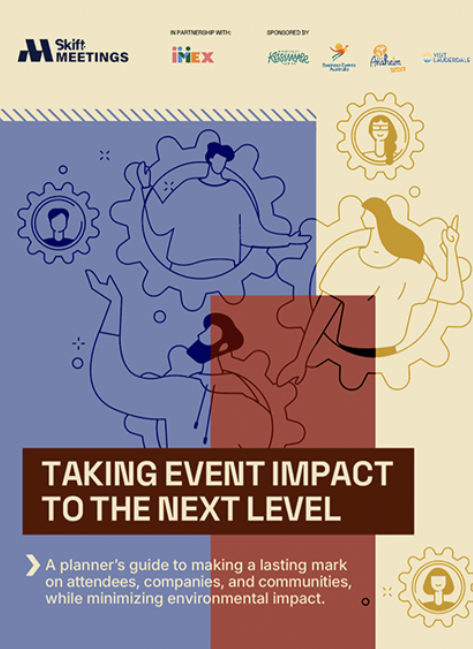
Don’t miss Skift Meetings’ most recent report, Taking Meetings to the Next Level: A planner’s guide to making a lasting mark on attendees, companies, communities, and the environment. Download it here.
He recommends the following strategies for planners to identify and work with sustainable destinations, hotels, and vendors:
- Choose destinations with credible commitments to regeneration, equity, and climate action. Look for cities participating in programs like the GDS-Index, which benchmark and improve environmental, social, and supplier performance.
- Go beyond green certifications. Ask venues and suppliers to demonstrate not just what policies they have, but what results they’re achieving. For example, reductions in food waste, renewable energy use, or community investment.
- Source locally and seasonally where possible, including food, furnishings, merchandising, talent, and storytelling. Local sourcing not only reduces emissions but also strengthens the economic and cultural fabric of the destination. If done right, it can leave a powerful social impact.
- Engage transportation partners to provide low-emission mobility solutions for delegates. This could include electric vehicle shuttles, public transport incentives, or bike-share programs.
- Seek partners that don’t just deliver services, but also collaborate to create outcomes, whether that’s through inclusive hiring, local supplier development, or legacy projects that live beyond the event.
Diversity Sourcing
At a time when many companies are scrubbing DEI from their websites and annual reports, some planners and destinations are speaking out about the importance of diversity.
“Diversity sourcing is not just important, it’s essential,” says Maria Grasso, chief sales officer, Philadelphia Convention and Visitors Bureau (PHLCVB). “From a business perspective, diversity brings real value to meetings. It expands the range of ideas, services, and perspectives that make each event more resonant for attendees.”
Planners who prioritize diversity sourcing are not only doing the right thing, she says, but they are also elevating the entire event experience by driving inclusive growth across a destination’s hospitality and tourism ecosystem.
Here are a few resources to get started:
- The Human Rights Campaign Foundation’s Corporate Equality Index ranks cities based on their efforts to support an inclusive environment.
- Organizations such as the LGBT Meeting Professionals Association have sections on their website listing diverse suppliers.
- Other industry associations offer DEI education as well, such as SITE’s August 2025 webinar: Accessibility as a Driver of Engagement and Belonging.
- Some DMOs provide resources to help planners connect with diverse local suppliers. The PHLCVB, for example, established a division called “PHL Diversity” in the 1980s that is still going strong today.